

 Ministry of Foreign Affairs and Expatriates Official Web Site
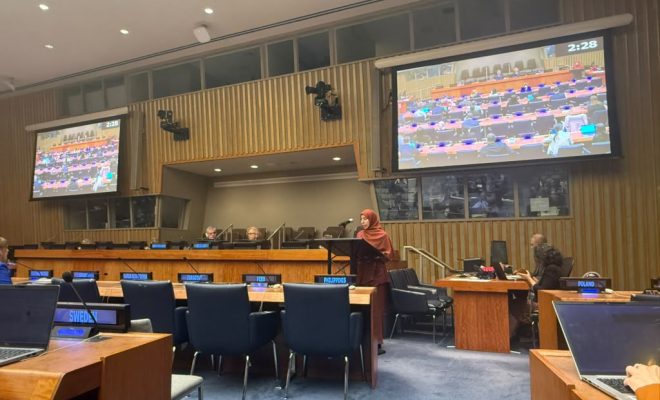
New York | Yemen has called for comprehensive international support that goes beyond humanitarian assistance and financial aid to include rebuilding state institutions, restoring their effectiveness, supporting reconstruction, rehabilitating infrastructure, and strengthening productive and public service sectors. Such support would enable the government to meet the needs of the Yemeni people.
The call came in Yemen’s statement delivered on Wednesday by Minister of Foreign Affairs and Expatriates Dr Afrah Al-Zouba at a high-level meeting of the United Nations General Assembly marking the 40th anniversary of the adoption of the Declaration on the Right to Development.
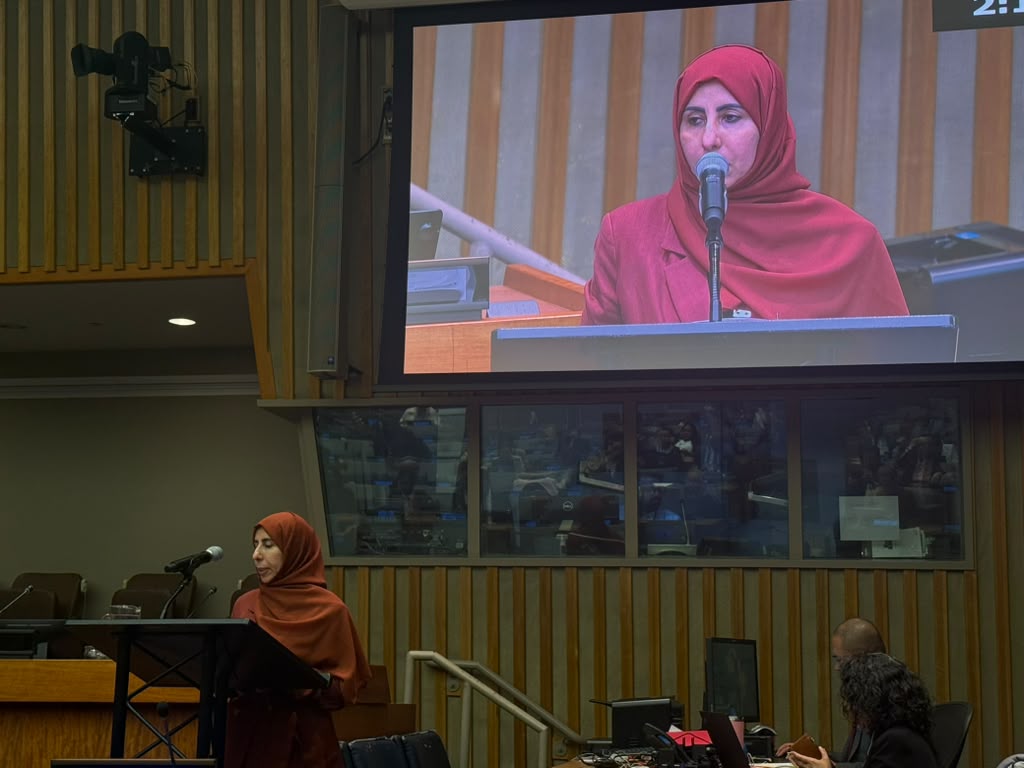
Minister Al-Zouba outlined the consequences of the war launched by the Houthi militia in 2014, including the destruction of vital infrastructure, a deepening humanitarian and economic crisis, and the erosion of government institutions’ ability to achieve the Sustainable Development Goals. The war has also left millions of Yemenis increasingly dependent on humanitarian aid.
She stressed the need for technical support and the sharing of expertise and knowledge to improve governance and public administration, strengthen the rule of law, and build national institutions capable of leading recovery and development.
“Realising the right to development in Yemen requires a shift from crisis response to recovery, development and resilience, through an integrated approach that links peace, development and humanitarian action,” she said.
Forty years after the declaration was adopted, the right to development still faces growing challenges, particularly in developing countries and those affected by conflict and crises, she added. Despite progress in health, education, poverty reduction and technology, inequality, funding gaps and structural barriers continue to prevent many countries from fulfilling their development potential.
Minister Al-Zouba called for an international environment that supports development by closing funding gaps, improving access to investment and technology, strengthening cooperation and capacity building, and reforming the international financial system to make it fairer and more responsive to the needs of developing countries, especially those affected by fragility and conflict.
She also highlighted the need to use technology and artificial intelligence to close development gaps, expand opportunities and reduce inequality.
She said that enabling people to exercise their right to development requires peace, stability, strong national institutions and international cooperation based on solidarity and fairness. This would help ensure that countries affected by conflict and crises are not left behind, and that their people can build a more stable and prosperous future.