

 Ministry of Foreign Affairs and Expatriates Official Web Site
Kuwait
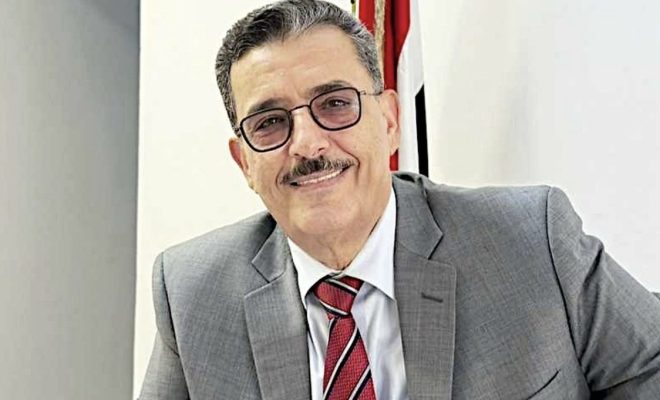
In an interview conducted by journalist Fare Ghaleb and published by the Kuwaiti newspaper Arab Times, H.E. Ali Bin Sfaa, Ambassador of the Republic of Yemen to the State of Kuwait, addressed the latest developments in Yemen and the impact of threats posed by the terrorist Houthi militia on international maritime security in the Red Sea and the Bab al-Mandab Strait. He also highlighted the Yemeni government’s efforts to achieve peace and restore state institutions.
Furthermore, H.E praised the distinguished bilateral relations between Yemen and Kuwait, expressing appreciation for Kuwait’s steadfast support for the Yemeni people and its humanitarian and development efforts. He emphasized the vital importance of strengthening regional and international cooperation to maintain the region’s security and stability and to support the Yemeni people’s aspirations for peace and development.
Yemeni Ambassador to Kuwait Dr. Ali bin Safaa said the decision of Presidential Leadership Council Chairman Dr. Rashad Al-Alimi to resume oil exports is a strategic step towards restoring sovereignty and revitalizing the Yemeni economy. In a statement to the newspaper, Bin Safaa affirmed that the decision is a significant shift in confronting what he described as ‘Houthi blackmail’, which disrupted one of the most important sources of state revenue.
He disclosed that the Houthi militia used drones in attacking the Al-Dhaba oil terminal in Hadramawt Governorate and the Al-NashimaPort in Shabwa Governorate in October and November 2022, halting the Yemeni crude oil exports and depriving the public treasury of revenues from such exports of around 70,000 barrels per day. He pointed out that the export suspension caused direct and indirect losses exceeding $3 billion and contributed to a budget deficit of more than 70 percent. He added that these losses led to the depreciation of the national currency, delays in paying government employee salaries, and weakened the government’s ability to provide basic services like electricity, water and healthcare.
He believed that resuming oil exports will yield a number of economic gains, most notably boosting public revenues and increasing the Central Bank of Yemen’s foreign currency reserves, which will stabilize the Yemeni Rialexchange rate and ensure the regular payment of salaries for civilian and military employees. He said the decision will also provide the necessary cash to purchase fuel for power plants, support the water and health sectors, and restart hospitals and health centers, reduce the cost of living and stabilize the prices of basic commodities due to the improved value of the national currency.
He indicated that resuming oil exports will improve the performance of service and development institutions and alleviate the pressure on citizens. He emphasized that the attacks on oil ports in 2022 were not merely attacks on economic facilities, but rather an economic war crime that harmed the livelihoods of Yemenis. He reiterated that the decision of the Presidential Leadership Council confirms the commitment of the legitimate leadership to put the interests of the Yemeni people on top of its priorities. He stressed that resuming and securing oil exports could be the cornerstone for restoring the health of the national economy and enhancing the ability of the state to meet its obligations towards the citizens.
Source: ArabTimes